
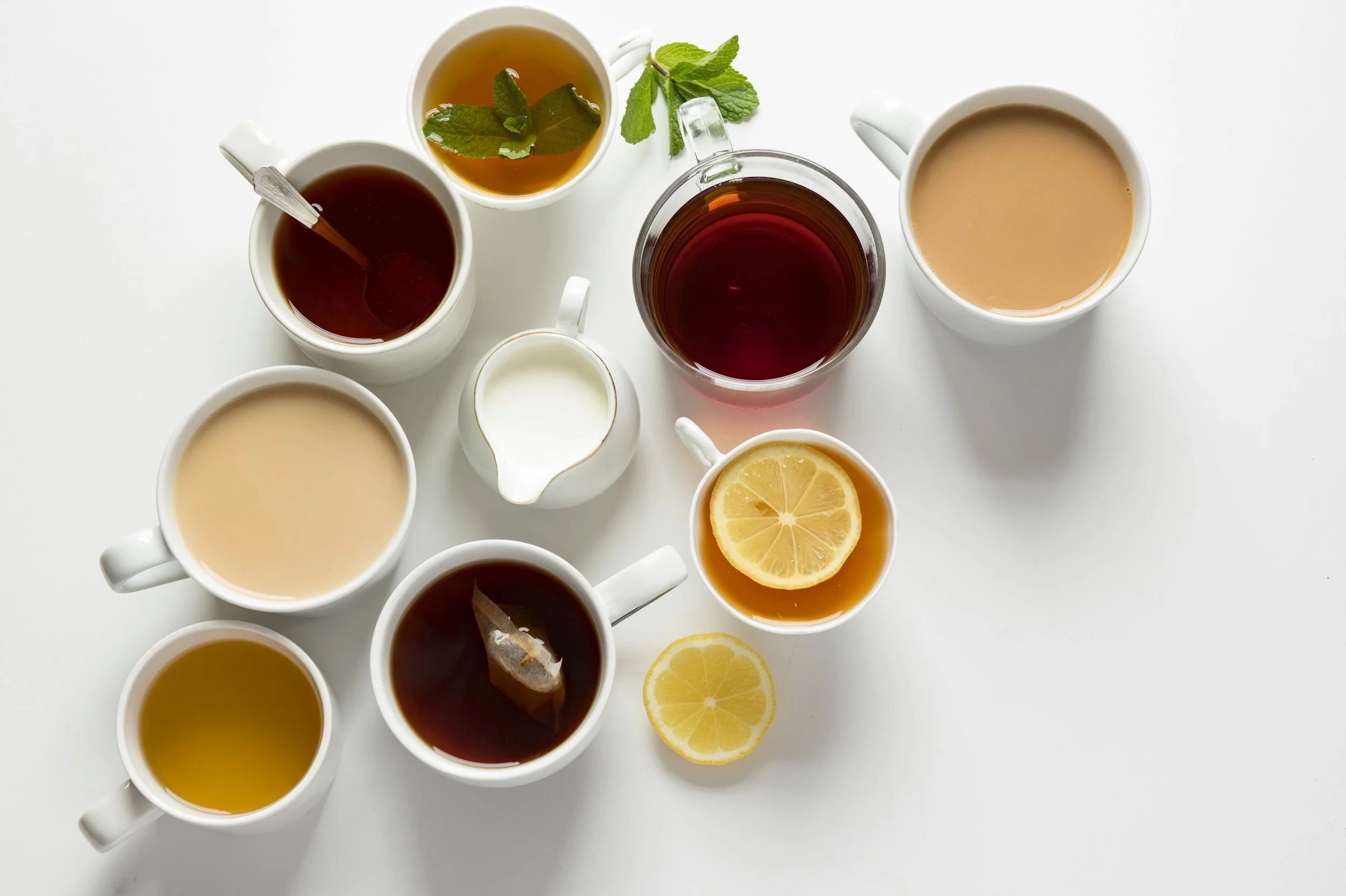
Tea Flavors and Cupping Notes
A Guide to Tea Types, Processing, and Flavor by The Leaf and Cup
Tea flavor starts long before water ever touches the leaf. The final character of a tea is shaped by cultivar, climate, soil, altitude, season of harvest, and the skill of the tea maker, but one of the biggest influences is how the leaf is processed after picking. The way a tea is withered, heated, rolled, oxidized, roasted, fermented, scented, or aged determines whether it becomes white tea, green tea, oolong tea, black tea, pu-erh tea, or a flavored tea.
Traditional tea production was developed in China through a highly controlled sequence of careful steps done by hand. Today, many teas are still made with that same philosophy, even when machinery assists with some stages. In the tea world, the term orthodox tea processing generally refers to methods that preserve the leaf and follow the logic of traditional hand craftsmanship.
Below is a closer look at the major tea categories, classic blends, scented teas, and notable Japanese and Chinese teas, along with the flavor notes that make each one distinct.
Common Tea Blends and Classic Favorites
East Frisian Blend
The East Frisian Blend comes from a region of northern Germany where black tea is woven deeply into daily life. East Frisian tea culture is famous for its ritual presentation: a strong black tea is poured over a large sugar crystal, then finished with a spoonful of cream that is floated on top instead of stirred in.
The blend itself is usually bold, brisk, and full-bodied, designed to stand up to both sugar and cream. It is one of the strongest traditional tea styles in Europe and a reminder that tea customs can be every bit as ceremonial as they are practical.
English Breakfast
English Breakfast tea is one of the world’s best-known black tea blends. While there is no single universal recipe, the goal is usually the same: a strong, hearty, satisfying cup that works beautifully in the morning and holds up well to milk.
Depending on the maker, English Breakfast may include teas from India, Sri Lanka, Kenya, or China. In the cup, expect a profile that is brisk, balanced, malty, and smooth, with enough strength to earn its place beside toast, eggs, or the chaos of a weekday morning.
Irish Breakfast
Irish Breakfast tea is typically built around stronger black teas, especially Assam, and is known for its dark color, malty richness, and powerful body. It is usually deeper and more assertive than English Breakfast, making it a favorite for drinkers who want a serious morning tea.
This is not a shy blend. Irish Breakfast is the kind of tea that arrives wearing boots.
Russian Caravan
Russian Caravan tea draws inspiration from the historic overland tea trade between China and Russia. The modern blend is often made with Chinese black teas and may include Lapsang Souchong for its signature smoky edge.
In flavor, Russian Caravan is usually smooth, warming, slightly smoky, and gently resinous, making it especially appealing in cooler weather or later in the day. It is one of those teas that feels like a coat.
Chinese Tea Types and Traditional Styles
Chunmee
Chunmee, often translated as “precious eyebrow,” is named for the curved shape of its leaf. It is a Chinese green tea with a light body, a smooth texture, and a flavor that may show subtle plum-like notes. It is approachable but still distinctive.
Feng
Feng is a descriptive Chinese term often translated as peak or point, usually referring to the shape of the leaf. It is less a standalone tea than a poetic piece of tea vocabulary.
Gu Zhang Mao Jian
Gu Zhang Mao Jian is a prized Chinese spring tea harvested during a very short picking window. The leaves are often tipped and elegant, and the brewed liquor is known for being smooth, refined, and gently layered. Limited harvest timing adds to its appeal among tea enthusiasts.
Gunpowder
Gunpowder tea is made by rolling green tea leaves into tight pellets that help preserve freshness. As they unfurl in hot water, they release a cup that is often stronger, darker, and slightly smokier than flatter Chinese green teas. This style became especially well known in export markets and remains central to Moroccan mint tea.
Long Jing
Long Jing, also called Dragon Well, is among China’s most famous green teas. The leaves are pan-fired and flattened, producing a tea that is visually distinctive and highly prized. The cup is often smooth, sweet, chestnutty, vegetal, and clean, with excellent Long Jing showing harmony in color, aroma, flavor, and leaf shape.
Pan Long Yin Hao
Pan Long Yin Hao is a Chinese green tea known for more delicate complexity. It often delivers a flavor profile that is vegetal yet sweet, showing how Chinese green teas can be layered without becoming aggressive.
Pi Lo Chun
Pi Lo Chun, or “Green Snail Spring,” is one of China’s celebrated green teas. Its tightly curled leaves unfurl into a cup that is often sweetly aromatic, soft in texture, floral-fruity in impression, and well-rounded in body. It is elegant and expressive without becoming heavy.
Shou Mei
Shou Mei, often translated as “longevity eyebrow,” is named for the shape of the leaf. It is associated with a looser, more rustic beauty, and the name reflects the poetic imagery that runs through Chinese tea naming traditions.
Temple of Heaven
Temple of Heaven is a high-grade style of gunpowder tea, often associated with Zhejiang province. Compared with standard gunpowder, it tends to be cleaner, sweeter, more aromatic, and more refined, with grassy freshness beneath the rolled-leaf strength.
Yun Wu
Yun Wu translates to clouds and mist, a phrase often used in Chinese tea to evoke mountainous growing regions and the atmospheric conditions that help produce fine leaf. It is both descriptive and wonderfully cinematic.
Yu Hua
Yu Hua, or “flower rains,” is another beautifully named Chinese tea. It tends to be associated with elegant leaf appearance and a cup with delicate, refined flavor notes, making it one of those teas that feels composed rather than loud.
Japanese Tea Types
Japanese tea is primarily known for green tea, but that does not mean all Japanese teas taste the same. Differences in harvest timing, shading, roasting, leaf selection, and finishing technique create a wide range of flavor profiles.
Bancha
Bancha is often considered an everyday Japanese green tea. It is usually made from more mature leaves harvested later in the season, which gives it a milder, less intense flavor than premium first-flush teas. It may taste earthy, lightly grassy, or gently woody and is often used as the base for Genmaicha.
Genmaicha
Genmaicha combines Japanese green tea, often Bancha or Sencha, with roasted rice. The result is a comforting tea known for its toasty aroma, nutty warmth, and mellow green tea freshness. It is one of the most approachable teas for new drinkers and a favorite for pairing with food.
Gyokuro
Gyokuro is one of Japan’s most prized green teas. Before harvest, the tea bushes are shaded for several weeks, which changes the chemistry of the leaf by increasing certain amino acids and deepening the tea’s green intensity.
The cup is typically rich, smooth, vegetal, sweet, and full of umami, with a lush texture that feels almost brothy in the best examples. Gyokuro is a quiet flex.
Hojicha
Hojicha is a roasted Japanese green tea, often made from Bancha. Roasting transforms the leaf, shifting it away from bright grassy notes and toward nutty, earthy, toasted, and lightly caramel-like flavors. The liquor is often amber to reddish-brown, and the tea is prized for its soothing, easy-drinking character.
Kokeicha
Kokeicha is a more unusual Japanese tea made by combining tea material, often from Matcha, into a paste that is then extruded into fine strands before drying. In the cup it can offer a mild vegetal profile with a distinctive processed style that sets it apart from whole-leaf teas.
Kukicha
Kukicha is made from the stems and twigs of the tea plant rather than primarily the leaf blade. Because of that composition, it is typically lower in caffeine and offers a flavor that is mild, woody, nutty, creamy, and slightly sweet. It is subtle, but not boring.
Matcha
Matcha is powdered green tea used in the Japanese tea ceremony and beyond. It is made by grinding specially prepared Tencha into an extremely fine powder, then whisking that powder directly into hot water.
Because the leaf itself is consumed rather than merely steeped, Matcha delivers a concentrated vegetal flavor, creamy body, vivid green color, and a frothy texture when prepared correctly. It can taste grassy, sweet, savory, and deeply energizing all at once.
Sencha
Sencha is the most commonly consumed tea in Japan and a foundational Japanese green tea. It is typically steamed soon after harvest, preserving a flavor that is fresh, grassy, vegetal, and sometimes slightly sweet or marine. Depending on harvest and style, Sencha may be labeled Ichiban-cha for first flush or Niban-cha for second flush.
Tencha
Tencha is the leaf that eventually becomes Matcha. It is grown under shade like Gyokuro, then processed in a way that prepares it for grinding rather than traditional steeping. On its own, it tends to be soft, smooth, and mild, but its biggest claim to fame is its role as Matcha’s origin story.
Scented, Spiced, and Flavored Teas
Earl Grey
Earl Grey tea is a black tea scented with bergamot oil, the fragrant citrus oil that gives it its unmistakable aroma. The origin story varies depending on who is telling it, which has only added to the tea’s mystique.
Whatever its history, Earl Grey remains one of the most iconic flavored teas in the world. Its flavor is typically bright, citrusy, floral, and elegant, with the bergamot lifting the richness of the black tea base. It is equally at home in a porcelain teacup or iced over a summer afternoon.
Jasmine Tea
Jasmine tea is celebrated for its floral fragrance and refined balance. It is most often made by layering jasmine blossoms with a green tea or light oolong base so the tea leaves absorb the flower’s aroma over time. The leaves are then finished and dried again.
Done well, jasmine tea is soft, perfumed, airy, and lightly sweet, with a fragrance that feels expressive rather than artificial. Some styles include terms such as Chun Hao or Yin Hao, names that often refer to leaf style or grade.
Lapsang Souchong
Lapsang Souchong is one of the most recognizable teas on earth because its leaves are traditionally dried over pine fires, allowing the smoke to permeate the tea. The result is a cup that can be bold, resinous, smoky, savory, and hauntingly aromatic.
It is not a background tea. Lapsang enters the room first.
Because of its strong personality, it is often used in blends such as Russian Caravan, but many drinkers enjoy it straight for its distinctive campfire-like character.
Lychee Tea
Lychee tea blends black tea with the aroma or flavor of lychee fruit, a fragrant fruit long associated with southern China. The result is usually sweet, lightly floral, and gently citrusy, with the richness of black tea supporting the exotic fruit character.
It is an excellent example of how fruit and tea can complement one another without turning the cup into candy.
Rose Tea
Rose tea combines green tea or black tea with rose petals or rose aroma, producing a tea that is fragrant, soft, and unmistakably floral. The best versions are elegant rather than perfumey, with the rose enhancing the leaf rather than overpowering it.
In the cup, rose tea often feels romantic, but when done right it is also fresh, balanced, and surprisingly refreshing.
Types of Tea by Processing Style
Black Tea
Black tea is made through full oxidation, which gives it its darker leaf color, stronger body, and deeper flavor. After the leaves are withered, they are typically rolled several times to break the cell walls and expose the natural compounds that react with oxygen. The tea maker then allows the leaves to oxidize until the desired aroma, color, and flavor have developed. Finally, the leaves are fired to halt the process.
Traditional orthodox black tea production preserves more of the leaf shape and often produces greater nuance in the cup. Flavors can include malt, dried fruit, cocoa, honey, wood, spice, or smoke, depending on region and style.
Much of the commercial black tea made today uses the CTC method, or crush-tear-curl, a high-efficiency processing system that turns the leaf into uniform granules. CTC teas brew fast, strong, and dark, which makes them especially common in breakfast blends, teabags, and milk-friendly teas.
Decaffeinated Tea
Decaffeinated tea is created by removing most of the naturally occurring caffeine from the leaf while preserving as much of the original character as possible. Several methods exist, but one of the most respected is the carbon dioxide process, in which pressurized carbon dioxide binds to the caffeine molecules and removes them with minimal damage to flavor.
Well-made decaffeinated tea still offers body, aroma, and balance, making it a practical choice for evening tea drinkers or anyone looking to reduce caffeine without giving up the ritual of tea.
Flavored Tea
Flavored tea begins with a tea base, often black or green tea, that is enhanced with fruit, spice, flowers, herbs, or essential oils. Some flavored teas are scented after the tea is finished, while others are influenced during processing so the leaf absorbs more of the aromatic material.
The result can range from bright citrus Earl Grey to lush jasmine tea, sweet lychee tea, or romantic rose tea. A good flavored tea should still allow the character of the base tea to shine through rather than drowning everything in perfume.
Green Tea
Green tea is made by preventing the leaf from fully oxidizing after harvest. Once the leaves have begun to lose some surface moisture, they are heated quickly, usually by steaming or pan-firing, to stop enzymatic oxidation and preserve the tea’s green character. The leaves may then be shaped, twisted, flattened, curled, or rolled depending on the style.
Because oxidation is limited, green tea tends to hold onto its brighter, fresher qualities. Flavor can range from grassy, vegetal, seaweed-like, and chestnutty to sweet, floral, or lightly nutty depending on origin and production method. Japanese green teas often lean more steamed and umami-rich, while many Chinese green teas show toasted, sweet, or pan-fired notes.
Oolong Tea
Oolong tea occupies the broad and beautiful middle ground between green tea and black tea. The leaves are usually partially withered, then gently bruised or shaken to trigger oxidation along the edges. From there, the tea maker carefully manages the oxidation level before the leaves are heated to stop the process.
This is where oolong becomes especially interesting for both tea drinkers and search engines alike: oxidation in oolong can vary widely, often producing styles that range from light, floral, creamy, and green-leaning to deeper, roasted, woody, honeyed, or nutty. Some oolongs are only lightly oxidized and taste fresh and fragrant, while others are darker and more layered. Pouchong, often grouped with oolong tea, is especially light in character and is sometimes used as a base for floral scenting, including high-quality jasmine tea.
If green tea is a violin and black tea is a drum, oolong is the whole orchestra pit.
Pu-Erh Tea
Pu-erh is one of the most distinctive tea styles in the world because it develops through true fermentation and microbial aging, not simply oxidation. Originating in Yunnan province, China, pu-erh begins with processed tea leaves that are then aged over time, either naturally over many years or through accelerated modern methods.
This aging changes the tea dramatically. Young pu-erh may be sharper or greener, while aged pu-erh becomes earthy, woody, mellow, deep, and smooth, sometimes with notes of forest floor, leather, dark minerals, or damp cedar. Pu-erh is often compressed into cakes, bricks, or nests, tying it to centuries of transport, trade, and traditional storage practices. For tea drinkers who love complexity, pu-erh is not just a beverage. It is a time machine in a cup.
White Tea
White tea is the least handled of the major tea types, and that minimal processing is exactly what gives it its delicate personality. After plucking, the tender buds and young leaves are withered and gently dried, allowing moisture to evaporate naturally. Because the leaves are not heavily rolled or oxidized, the finished tea remains light in both appearance and flavor.
In the cup, white tea is known for its soft body, pale color, and subtle sweetness. Depending on the leaf grade, it may show notes of hay, melon, wildflowers, honey, or fresh spring air. White tea is often favored by drinkers who enjoy elegant, nuanced cups rather than bold intensity.
Why Tea Flavor Matters
Learning how tea is processed helps explain why one cup tastes grassy and marine, another tastes malty and dark, and another tastes floral, smoky, or earthy. Understanding white tea, green tea, oolong tea, black tea, pu-erh tea, flavored tea, Japanese tea, and Chinese tea makes it easier to choose teas that actually fit your taste.
At The Leaf and Cup, we believe good tea should be both enjoyable and understandable. When you know what happened to the leaf, the cup starts making sense.